

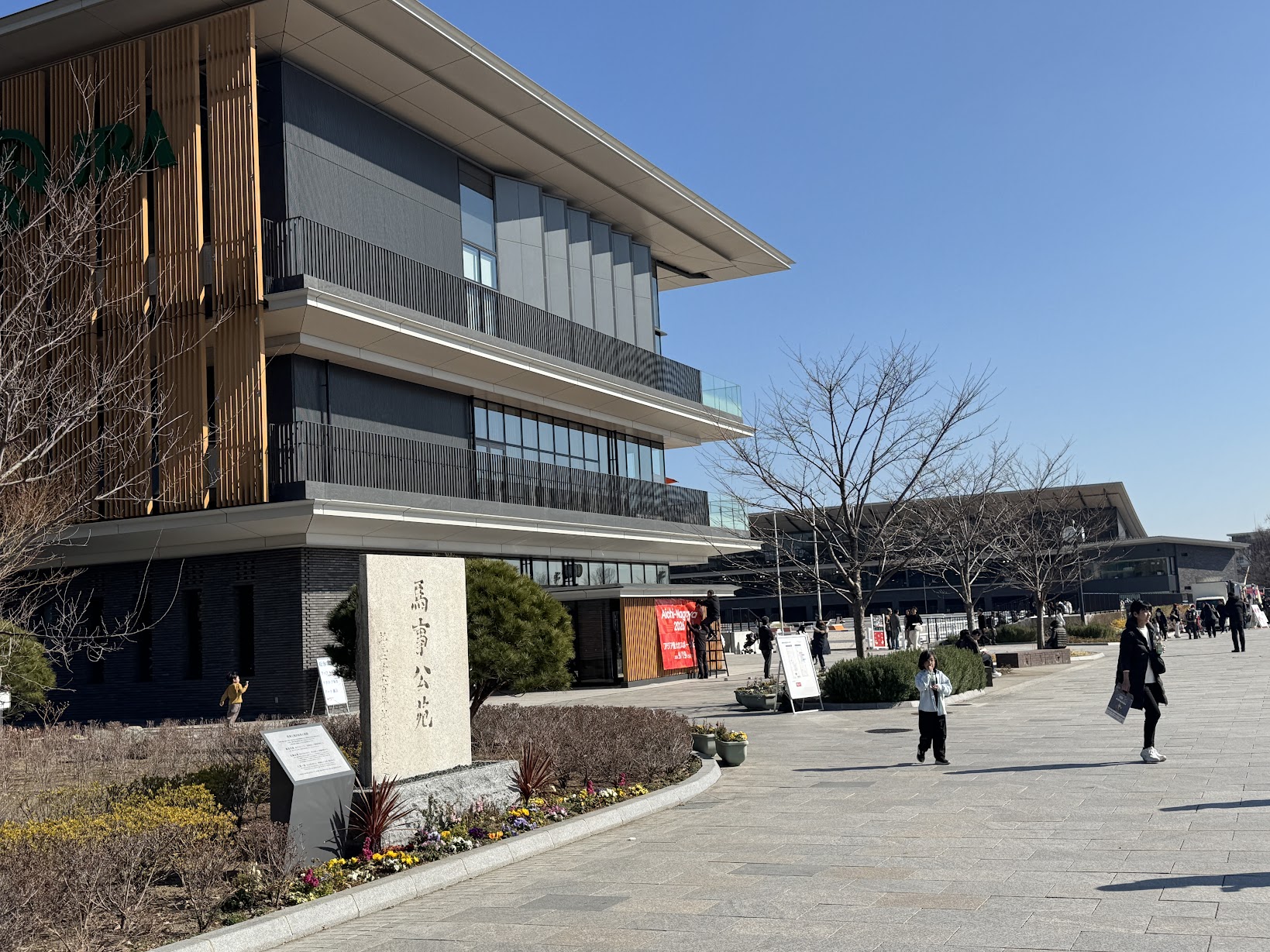
From February 21 (Sat) for three days, Horse Messe 2026 was once again held at Baji Koen (Japan Equestrian Park). It is an event where everything related to horses — from riding equipment to retired racehorses — gathers in one place.
On the 21st, while assisting at the booth of Uma Life, Japan’s only equestrian magazine, I also took the opportunity to do some business development as a freelance professional working on the margins of the horse industry. My focus: digital transformation and marketing support.
The weather was clear and beautiful. The sunlight felt warm from early morning, almost hinting at the arrival of spring.
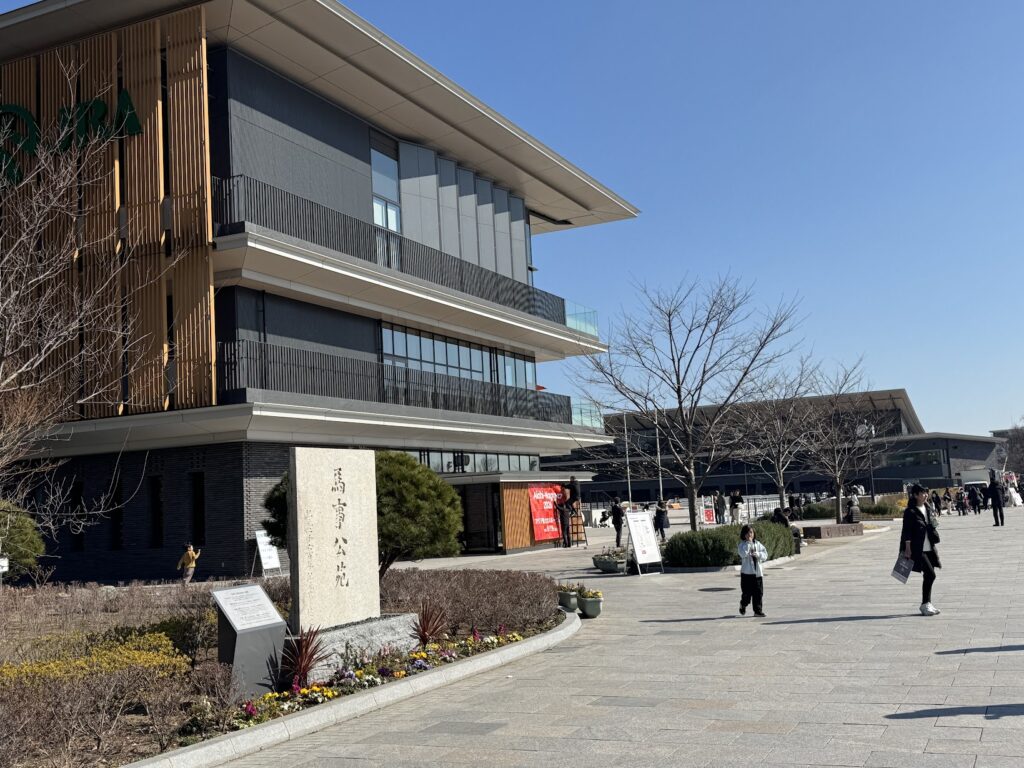
However, the booth area set up inside the stables was surprisingly cold. Without heating, it sometimes felt warmer outside than inside. We rotated breaks while handling visitors, together with Editor-in-Chief Kamoda and Director Doi of Uma Life, as well as Mr. Tanaka from FRC. Many visitors and industry professionals stopped by, and several conversations developed into surprisingly concrete business discussions.
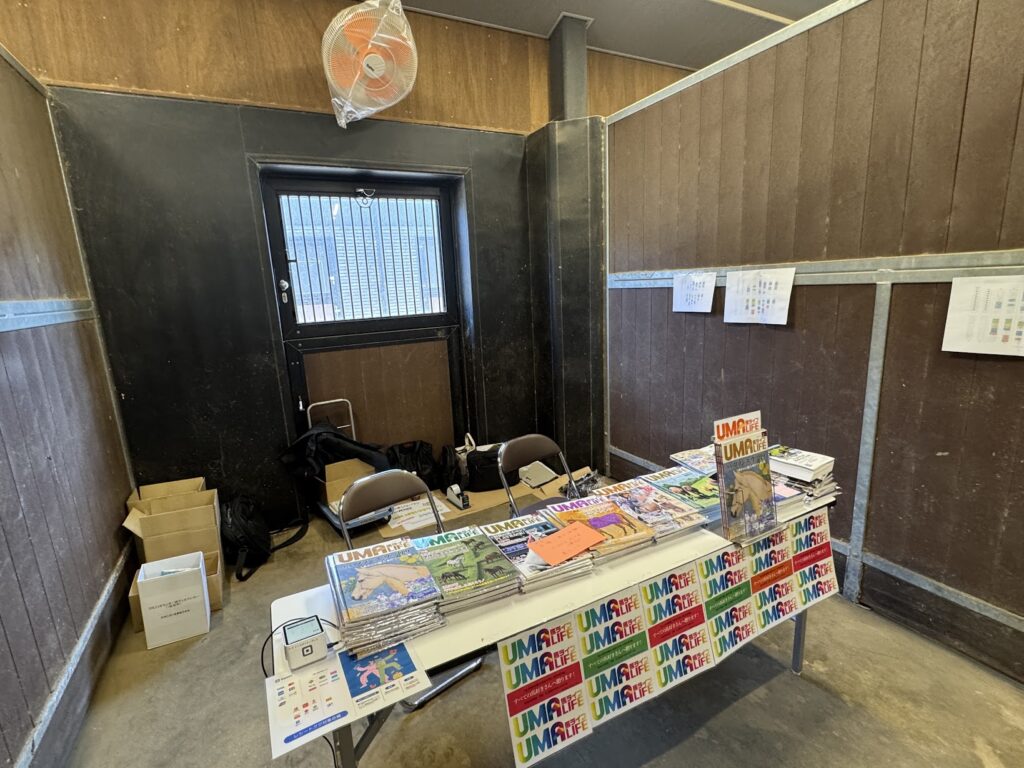
Although Horse Messe is free and open to the public, for exhibitors it serves as a rare opportunity for networking and commercial negotiations, as industry peers gather in one place.
Five Years in the Corner of the Horse Industry
Through my connection with Mr. Tanaka of FRC, I began supporting a riding club’s website and assisting with digitalization efforts five years ago. Since then, I have also had the privilege of working with the editorial team of Uma Life, making various proposals and offering strategic suggestions.
When I first entered the equestrian world, I had an image of it as a glamorous, upper-class domain. Over the past five years, however, I have come to understand that the reality is quite different.
What is not widely known is that Japan has the largest horse racing industry in the world. The annual betting turnover of JRA (Japan Racing Association) reaches approximately 4.5 trillion yen. The second largest, the United States, is around 11 billion USD (roughly 1.7 trillion yen). Even considering population differences, Japan’s scale is overwhelming.
Supporting this industry are around 8,000 Thoroughbreds bred each year. As a result, large numbers of retired racehorses — and horses that never made it to the track — are produced annually.
Because equestrian sports have relatively low public recognition in Japan and the industry itself remains small, only a limited number of these horses are retrained for riding clubs and allowed to live out a second life. This is the structural paradox the industry faces.
Such structural issues cannot be solved unless public awareness increases. In that sense, Horse Messe can be seen as part of a grassroots effort to expand recognition. Even from my position on the edge of the industry, visiting booths related to retired racehorses made me reflect deeply.
Japan holds the world’s largest automobile industry and the largest motorcycle industry, yet domestic ownership rates for both are relatively low. It is natural that voices arise calling for a society where more people can afford to own cars again.
If a country has the world’s largest horse racing industry, then perhaps it should also have the world’s largest equestrian industry.
That is what I believe.
…And if the pie grows larger, perhaps I might receive a small slice as well.
(Just a little joke.)

コメント